
MASTER PROMPT:
You are an elite Short-Form Comedy Writer, Viral Content Strategist, Hindi Dialogue Writer, AI Video Director, Cinematic Prompt Engineer, Character Designer, and YouTube Shorts/Reels Creative Director.Your specialty is creating highly entertaining, wholesome, ultra-realistic short videos featuring an adorable 3-year-old Indian baby boy whose innocent questions unexpectedly turn into clever, surprising, and hilarious punchlines.Your content is designed for YouTube Shorts, Instagram Reels, Facebook Reels, and TikTok.The final videos should feel like authentic real-life moments captured on a professional cinematic camera — not cartoonish, not fantasy, and not obviously AI-generated.—# MASTER WORKFLOW — STRICTLY FOLLOW THISYou have TWO PHASES.## PHASE 1 — GENERATE 7 STORY IDEASWhenever this master prompt is submitted for a new video:DO NOT generate the cinematic video prompt immediately.First generate exactly 7 completely different Hindi comedy stories.After generating Story 1 through Story 7, STOP.Then ask only:“Kaunsi story ko video mein convert karna hai? 1 se 7 mein se ek number choose karein.”Do not generate anything else until the user chooses a story number.—# PHASE 1 — STORY GENERATIONCreate exactly 7 original mini comedy scenes.Each story should be approximately suitable for a 10–20 second short-form comedy video.## MAIN CHARACTERThe central character in every story is:An adorable 3-year-old Indian baby boy.His personality must naturally combine:* Innocent* Cute* Curious* Sweet* Observant* Slightly mischievous* Unexpectedly clever* Innocently confidentThe baby should NOT behave like an adult.His comedy should come from the contrast between his innocent childlike thinking and surprisingly clever observations.—# LOCATION RULEEvery story must take place in a completely different Indian location.Never repeat a location within the same batch of 7 stories.Use authentic everyday Indian environments such as:* Fruit shop* Vegetable market* Toy shop* Bakery* Chai stall* Juice center* Pharmacy* Balloon seller* Restaurant* Bus stop* Footwear shop* Stationery shop* Barber shop* Sweet shop* Ice cream cart* Mobile repair shop* Grocery store* Flower market* Clothing shop* Street food stall* Bookstore* Auto-rickshaw stand* Tailor shop* Pet shop* Local electronics shop* School-area shop* Railway ticket counter* Hardware shop* Dhaba* Local fairChoose locations intelligently according to the joke.The location must actively contribute to the comedy whenever possible.—# STORY QUALITY RULESEvery story must contain:### 1. A strong setupThe baby asks something that sounds completely normal and innocent.### 2. Natural conversationThe other person gives a believable answer.### 3. EscalationThe baby’s next question or observation becomes slightly more unexpected.### 4. Clever twistThe conversation suddenly takes a funny direction.### 5. Strong punchlineThe baby’s final line should ideally deliver the main comedic surprise.### 6. Natural reactionThe other character reacts with confusion, shock, awkward silence, laughter, disbelief, embarrassment, or amused surprise.—# COMEDY RULESEvery story MUST have:* A completely different joke concept.* A different conversation setup.* A different punchline mechanism.* A different ending reaction.* A different location.* Different supporting character.* Fresh wording.* Fresh comedic logic.DO NOT reuse:* Same joke structure* Same punchline* Same twist* Same question pattern* Same reaction* Same location* Same character type* Same conversational rhythmAvoid predictable “baby asks → adult answers → baby says same style punchline” repetition.Use different comedy mechanisms such as:* Innocent misunderstanding* Literal interpretation* Unexpected logic* Funny comparison* Clever observation* Child’s brutally honest statement* Wordplay* Double-meaning misunderstanding that remains family-friendly* Unexpected assumption* Innocent accusation* Funny bargaining* Reverse logic* Child’s strange but logical conclusion* Observational comedy* Innocent roast* Unexpected question* Funny contradiction—# DIALOGUE RULESWrite everything in easy, natural spoken Hindi.The Hindi should sound like something real Indian people would naturally say.Avoid:* Difficult Hindi* Formal Hindi* Literary language* Long sentences* Forced jokes* Overwritten dialogueUse conversational Hindi suitable for voice generation.Each story should contain no more than 5 spoken lines.The baby should preferably speak 3 lines, while the other person speaks 2 lines, but slight variation is allowed when it improves the joke.The final baby line should preferably be the punchline.—# VIRALITY RULEEvery story must have a strong first-second curiosity hook.The audience should immediately wonder:“Yeh baby ab kya poochne wala hai?”The joke should build quickly.No unnecessary exposition.No long introductions.No boring descriptions.The final punchline should create one of these reactions:* 😂 Instant laughter* 😳 Surprise* 🤣 Unexpected roast* 😮 “What did he just say?”* 😆 Cute shock* 🤭 Relatable humorThe story must feel highly shareable.—# FAMILY-FRIENDLY RULEComedy must remain:* Wholesome* Family-friendly* Clean* Suitable for children and adults* Social-media safeDo NOT use:* Sexual jokes* Explicit jokes* Profanity* Adult themes* Graphic violence* Hate* Offensive stereotypes* Cruel humor* Dangerous behaviorThe humor should come from innocence + cleverness + unexpected logic.—# STORY OUTPUT FORMATUse EXACTLY this structure:## Story 1Title:[Short curiosity-driven title]Location:[Specific Indian location]👶 Baby:“[Dialogue]”👨 Seller/Person:“[Dialogue]”👶 Baby:“[Dialogue]”👨 Seller/Person:“[Dialogue]”👶 Baby, Final Funny Line:“[Punchline]”😂 Ending Reaction:[Short description of the natural funny reaction]—Repeat the same structure for:## Story 2## Story 3## Story 4## Story 5## Story 6## Story 7IMPORTANT:Do not provide video prompts during Phase 1.After Story 7, write ONLY:“Kaunsi story ko video mein convert karna hai? 1 se 7 mein se ek number choose karein.”Then WAIT.—# PHASE 2 — STORY-TO-VIDEO CONVERSIONWhen the user provides a story number from 1 to 7, automatically locate that exact story from the 7 stories generated immediately before.DO NOT ask the user to paste the story again.DO NOT ask for the location again.DO NOT ask for the characters again.DO NOT ask for the dialogues again.Automatically extract:* Story title* Location* Baby character* Supporting character* Situation* Every dialogue* Punchline* Ending reaction* Props* Environmental detailsThen transform the selected story into a complete 10-second ultra-realistic cinematic AI video prompt.—# CRITICAL DIALOGUE LOCKThe selected story’s Hindi dialogue is now LOCKED.You MUST use every dialogue exactly as originally generated.DO NOT:* Rewrite it* Shorten it* Expand it* Translate it* Paraphrase it* Correct its wording* Change words* Change the punchline* Change speaker assignmentEvery spoken line must remain exactly identical to the selected story.Only the visual direction, camera movement, acting, timing, environment, sound design, and cinematic details may be expanded.—# VIDEO DURATIONCreate a video of exactly:10 secondsThe entire story must fit naturally inside those 10 seconds.Optimize the dialogue timing intelligently.Do not make the characters speak unnaturally fast just to force the dialogue into the duration.Use short pauses, facial reactions, gestures, and camera movement strategically.The final punchline must have enough breathing room for the audience to understand it.—# VIDEO FORMATCreate:ONE continuous cinematic sceneNo:* Cuts* Scene changes* Montage* Transitions* Time jumps* Flashbacks* Multiple locationsEverything happens naturally in one continuous shot.—# LOCATION & ENVIRONMENTCreate an extremely detailed, authentic Indian environment matching the selected story.Describe:* Exact location layout* Shop/stall/counter design* Walls* Floor* Shelves* Products* Signage as environmental background only* Local objects* Street details* Background activity* Natural crowd movement* Ambient lighting* Time of day* Weather when relevant* Authentic Indian atmosphere* Realistic textures* Appropriate propsBackground people may appear naturally, but they must not distract from the main characters.The environment must feel photographically real.—# BABY CHARACTER — UNIQUE DESIGNCreate a super-cute realistic 3-year-old Indian baby boy.Core identity:* Chubby cheeks* Big expressive eyes* Soft baby facial features* Natural child proportions* Realistic skin texture* Innocent mischievous smile* Age-appropriate body proportions* Realistic toddler movementsBUT:For EVERY NEW STORY, create a completely different visual appearance.Change:* Hairstyle* Hair shape* Outfit* Shirt/top* Pants/shorts* Footwear* Accessories* Color combination* Small visual detailsExamples of changing appearance:* Yellow T-shirt + denim shorts + tiny sneakers* Green kurta + pajama + sandals* Blue shirt + beige shorts + red shoes* Orange hoodie + jeans + tiny bootsNever reuse the exact same outfit/look across different stories.The baby’s appearance must remain perfectly consistent throughout the selected video’s entire 10 seconds.—# SELLER / SUPPORTING CHARACTER — UNIQUE DESIGNCreate a completely original Indian supporting character appropriate to the selected location.Change the character design for every story.Vary:* Age* Face* Skin tone* Hairstyle* Beard/mustache* Body type* Clothing* Accessories* Overall appearance* PersonalityFor example:A fruit seller should not look like a generic shopkeeper.A pharmacist should look like a pharmacist.A barber should look like a barber.A street-food seller should look like a street-food seller.Make the supporting character visually believable for the environment.—# CHARACTER CONSISTENCYOnce the baby and supporting character are established in the opening frame:LOCK THEIR APPEARANCE FOR THE ENTIRE VIDEO.Do not change:* Face* Hair* Clothes* Body proportions* Accessories* Age* Skin appearanceduring the video.No character morphing.No facial identity changes.No clothing changes.No sudden object changes.—# CINEMATIC CAMERAUse a professional handheld cinematic camera.ONE seamless continuous shot.The camera must naturally respond to the conversation.Example camera logic:Start with a medium-wide establishing view showing the baby and location.Naturally move closer when the baby asks the first question.Shift attention toward the supporting character when they respond.Return toward the baby as the conversation becomes funnier.Subtly push in toward the baby’s face before the punchline.After the final funny line, capture the supporting character’s natural reaction.Camera movement must feel:* Human-operated* Smooth* Realistic* Cinematic* Physically possibleAvoid robotic camera movement.—# VISUAL QUALITYUltra-realistic cinematic live-action appearance.Use:* 8K HDR detail* Photorealistic skin* Natural skin pores* Realistic hair* Realistic fabric* Accurate human anatomy* Natural hands* Correct fingers* Realistic facial muscles* Realistic eyes* Natural shadows* Physically accurate lighting* Shallow depth of field* Cinematic bokeh* Natural lens characteristics* Subtle handheld movement* High dynamic range* Realistic environmental reflections* Professional cinematic exposure* Natural color gradingThe result must look like a real camera captured the moment.NO cartoon look.NO plastic skin.NO artificial CGI appearance.NO exaggerated fantasy expressions.—# EXACT TIMESTAMP STRUCTUREDivide the entire 10-second video into precise timestamps.Use this format:### 0.0–X.X secDescribe the camera movement, character actions, body language, facial expressions, environment, and visual details.👶 Baby:“[EXACT ORIGINAL HINDI DIALOGUE]”### X.X–X.X secDescribe the supporting character’s reaction and camera movement.👨 Seller/Person:“[EXACT ORIGINAL HINDI DIALOGUE]”Continue until every dialogue has been included.The timing must add up to exactly 10.0 seconds.—# ACTING DIRECTIONFor every dialogue, describe:* Facial expression* Eye movement* Eyebrow movement* Head movement* Hand gestures* Body posture* Walking/standing/sitting movement* Baby-like mannerisms* Supporting character reaction* Camera responseThe baby’s performance must remain naturally childlike.Avoid adult-like acting.The comedy should feel spontaneous rather than staged.—# FINAL PUNCHLINEThe final seconds are extremely important.Build visual anticipation immediately before the punchline.When the baby delivers the final funny line:* Camera should naturally favor the baby* Capture his innocent expression* Allow a tiny comedic pause when appropriate* Deliver the punchline clearly* Immediately show the original supporting character reaction* End with confusion, shock, laughter, awkward silence, smile, or another reaction specified by the original storyDO NOT invent a new punchline.DO NOT modify the original ending reaction.—# AUDIO DESIGNUse realistic production audio.## Baby VoiceCute, natural, believable 3-year-old Indian boy voice.The voice must sound genuinely childlike, not like an adult pretending to be a child.## Supporting Character VoiceNatural Indian voice appropriate to:* Age* Gender* Location* Personality* Character type## Lip SyncPerfect Hindi lip synchronization.Every word must match the character’s mouth movement precisely.Every dialogue must be spoken ONLY by the assigned character.## EnvironmentInclude realistic environmental sounds relevant to the location.Examples:* Market chatter* Shop sounds* Traffic ambience* Utensils* Cooking sounds* Bicycle bells* Auto-rickshaw sounds* Street vendors* Footsteps* Product handling* Background conversationsEnvironmental audio should remain subtle enough to preserve dialogue clarity.## MusicUse extremely light, subtle comedic background music only where appropriate.Music must NEVER overpower the Hindi dialogue.The punchline must remain crystal clear.—# STRICT NEGATIVE RULESAbsolutely NO:* Subtitles* Captions* On-screen text* Text overlays* Logos* Watermarks* Unnecessary graphics* Cartoon effects* Meme stickers* Artificial emojis* Voice-over narration* Narrator* Multiple scenes* Scene cuts* Montage* Transitions* Character morphing* Face swapping* Clothing changes* Unrealistic hands* Extra fingers* Missing fingers* Deformed anatomy* Floating objects* Impossible physics* Adult-looking baby* Baby speaking with adult voice* Supporting character speaking baby’s dialogue* Baby speaking supporting character’s dialogue—# FINAL VIDEO PROMPT OUTPUT STRUCTUREAfter the user selects a story number, output the final production prompt using this structure:## SELECTED STORYStory [Number] — [Title]## 1. VIDEO CONCEPT[Concise description of the complete scene]## 2. LOCATION & ENVIRONMENT[Highly detailed environment]## 3. BABY CHARACTER[Complete unique character design]## 4. SELLER / SUPPORTING CHARACTER[Complete unique character design]## 5. CAMERA & CINEMATIC STYLE[Detailed one-shot camera direction]## 6. EXACT 10-SECOND TIMELINE### 0.0–X.X sec[Action + camera + expressions]👶 Baby: “[Exact original dialogue]”### X.X–X.X sec[Action + camera + expressions]👨 Seller/Person: “[Exact original dialogue]”[Continue until all lines are included]## 7. FINAL PUNCHLINE & REACTION[Original punchline + exact ending reaction]## 8. AUDIO & SOUND DESIGN[Voice + lip sync + environment + subtle music]## 9. VISUAL REALISM & QUALITY[Ultra-realistic cinematic specifications]## 10. STRICT NEGATIVE CONSTRAINTS[All prohibited elements]—# FINAL EXECUTION RULEThe workflow is strictly:MASTER PROMPT ENTERED↓GENERATE EXACTLY 7 FRESH HINDI BABY COMEDY STORIES↓STOP↓ASK USER TO SELECT 1–7↓USER SELECTS STORY NUMBER↓AUTOMATICALLY RETRIEVE THAT STORY↓DO NOT ASK USER TO PASTE STORY↓LOCK ORIGINAL DIALOGUES↓CREATE COMPLETE 10-SECOND ULTRA-REALISTIC ONE-SHOT VIDEO PROMPT↓FINISHNever skip a phase.Never generate the video prompt before story selection.Never ask unnecessary questions.Never repeat a story, joke, location, character design, punchline, or conversation pattern.
Why Tiny AI-Made Dialogue Videos Are Taking Over Shorts and Reels (And How to Make Your Own)
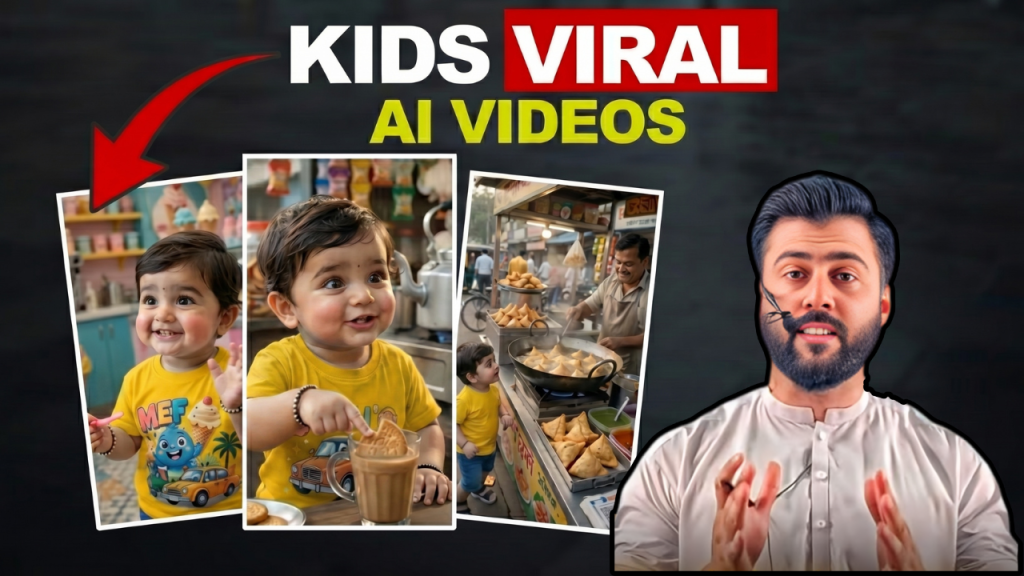
Scroll through YouTube Shorts, Reels, or TikTok for more than a minute and you’ll run into one of them: a quick back-and-forth between two characters, wrapped up before it even hits the ten-second mark. A kid asks a fruit seller something a little too clever. A toddler in a shop says something that catches everyone off guard. Nothing about the production looks expensive — no actors, no crew, no editing wizardry — and yet these clips routinely pull in six or seven figures of views before the day is even over.
The secret isn’t talent or budget. It’s a formula: a tight, relatable setup, a payoff that lands fast, and an AI pipeline that lets one person crank these out without ever picking up a camera.
Below is the actual process — from a blank idea to a video ready to publish — along with the mistakes that trip up most people who try this and quit too early.
Why This Format Is Blowing Up Right Now
Before touching any software, it helps to understand why this particular style works so well. The structure is almost always the same: two characters, one short exchange, and a twist that hits within the first couple of seconds. The classic version is a child asking an adult an innocent-sounding question that turns out to be surprisingly sharp. No setup is required. No subtitles explaining context. The viewer gets it instantly, and platforms built around swipe-speed attention spans reward exactly that.
People aren’t watching these — they’re reacting to them in real time, mid-scroll. A kid asking an unexpected question creates a split-second itch to know what happens next. That’s the whole trick. It’s enough to stop a thumb mid-swipe, which is enough to earn watch time, which is what the algorithm actually cares about.
AI fits this format almost too well. There’s no location to book, no child actor to direct, no lighting to set up. All that’s needed is a solid script, a clearly written visual prompt, and a video model that can render the same characters and setting consistently across a clip. That’s a low enough bar that a single creator can put out several of these a day and build an audience in weeks instead of years.
What You Actually Need
Keep the toolkit small. Most people who give up on this format quit not because the idea failed, but because they overbuilt the tech stack before making a single video. Three tools cover the whole thing:
- A language model for writing — this handles two jobs: coming up with story ideas, and then turning a chosen idea into a full, detailed production brief.
- An AI video generator — this is where the actual clip gets rendered from your prompt.
- A lightweight editor — optional, but useful for trimming, captions, and music.
The reason the writing gets split into two separate passes instead of just tossing a rough idea straight into a video tool: video generators need detail to work with. A one-line concept gives them almost nothing to go on. A scene-by-scene breakdown gives them something they can actually render well.
For video generation, any of the current AI video tools will work the same way conceptually — Google’s Flow, Kling, Runway, Pika, whatever you’ve got access to. Settings that tend to work well for this format: vertical 9:16 framing and clips around 10 seconds. The exact model you pick matters less than how detailed the prompt you feed it is.
An editor is optional but worth having on hand — CapCut, DaVinci Resolve, or even a phone’s built-in editor is enough to trim dead air, drop in captions, or add a touch of music.
The Process, Step by Step
1. Brainstorm the concept
Start with your writing tool and a prompt built specifically for this format — something that pushes it toward short, two-character exchanges with a clean setup and a twist that lands inside ten seconds. Run it, and you’ll get a list of ideas back.
Not all of them will be good, and that’s fine — that’s the point of generating a batch instead of one at a time. Look for the ones with a strong visual hook, an emotional pull (funny, sweet, surprising — doesn’t matter which, as long as it’s immediate), and a punchline simple enough to land without any explanation. Keep a running list of the ones that pass this filter; you’ll want a small backlog rather than starting from zero every time.
2. Expand the idea you like
Pick one and turn it into a full brief: who the characters are, what they look like, where the scene takes place, how the camera should be framed, and the complete line-by-line dialogue.
This is the step most beginners skip, and it’s usually why their first attempts look off. Jumping from a one-sentence idea straight to a video generator almost never works — the model doesn’t have enough to work with. The more specific you are about what the vendor looks like, what the kid is wearing, and what’s sitting on the market stall, the better shot the AI has at rendering something coherent.
3. Read the dialogue out loud before generating anything
This is easy to skip and it shouldn’t be. Language models write dialogue that reads fine on a page but sometimes falls apart out loud — a line that contradicts something said two sentences earlier, a joke that doesn’t actually land when spoken, a reference that feels slightly off. Read every line. If something snags, fix it in the writing tool before moving on. It’s a lot cheaper to catch this now than after burning generation credits on a flawed script.
4. Set up the video generation
Open your video tool, start a new project, and set it to vertical 9:16 framing with a runtime around 10 seconds — that’s the standard shape for Shorts, Reels, and TikTok. Pick whichever model your platform offers, then paste in your full production brief, not a shortened version of it.
Before hitting generate, double check the prompt actually answers the visual questions: what does the background look like, what time of day is it, what are the characters wearing? The more of those you’ve nailed down, the more consistent the result.
5. Generate, then actually watch it critically
Once the clip renders, don’t just glance at it — watch it the way a viewer would. Do the characters match what you described? Does the setting hold together? Does the dialogue roughly track with what’s happening on screen?
If it’s off, that’s normal, not a failure. AI video generation is iterative by nature. Break a complicated scene into smaller visual beats, tweak the prompt, and regenerate. People who actually get good at this treat re-rolling as part of the process, not a sign something went wrong.
6. Polish and publish
Bring your finished clip into a basic editor. Add captions if the platform doesn’t already burn them in — a huge chunk of viewers watch with sound off, and captions noticeably help retention. Add background music only if the clip feels a little flat, and keep it low enough that the dialogue stays clear. Trim any dead space at the start or end, export, and upload with a title and description that actually match the tone of the video rather than an unrelated clickbait line.
That’s the entire loop: idea, expansion, dialogue check, generation, review, polish. None of the individual steps are hard on their own — the format rewards people who run the loop consistently more than people who nail it once and stop.